

Understory tells the story of three scientific renegades who listen to and learn from plants. Outliers in their fields, they have pushed boundaries and persevered through controversy. Today the world is finally waking up to their message.
More info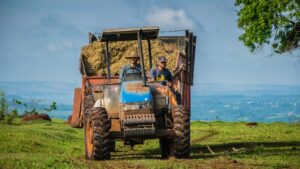
Once an arid, hostile land, Brazil’s Central West is now an Eldorado for agribusiness. In just ten years, booming soybean and cattle exports have propelled the region to economic growth that outpaces the rest of the country.
More info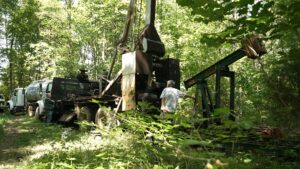
Whilst the whole world watches the fluctuations in the price per barrel with anxiety, the United States’ 8,000 small oil producers have reason to be happy. They account for 80% of the country’s production and, when prices rise, they stand to gain.
More info
Adaptation: the process of changing to suit different conditions. In today’s climate crisis, it means changing our way of life to survive its consequences. But is climate change adaptation a pragmatic new answer or a solution chosen decades ago? How did we come to this?
More info
Adaptation: the process of changing to suit different conditions. In today’s climate crisis, it means changing our way of life to survive its consequences. But is climate change adaptation a pragmatic new answer or a solution chosen decades ago? How did we come to this?
More info
Adaptation: the process of changing to suit different conditions. In today’s climate crisis, it means changing our way of life to survive its consequences. But is climate change adaptation a pragmatic new answer or a solution chosen decades ago? How did we come to this?
More info
Adaptation: the process of changing to suit different conditions. In today’s climate crisis, it means changing our way of life to survive its consequences. But is climate change adaptation a pragmatic new answer or a solution chosen decades ago? How did we come to this?
More info
For 70 years, industrial agriculture has promised to feed a growing world through chemical fertilisers, pesticides and high-yield seeds. This award-winning documentary investigates the true cost of that promise - one now inseparable from the climate and biodiversity crises it has helped create.
More info
The UN estimates that 90% of our agricultural land will be depleted by 2050 if we continue current farming practices. But there is an alternative. In drought-stricken Spain, Alfonso and his wife Yanniek are trying to save their farm from desertification by switching to sustainable agricultural methods. We follow them and other pioneers from around the world as they transform their masia into one of the largest regenerative farms in Europe.
More info